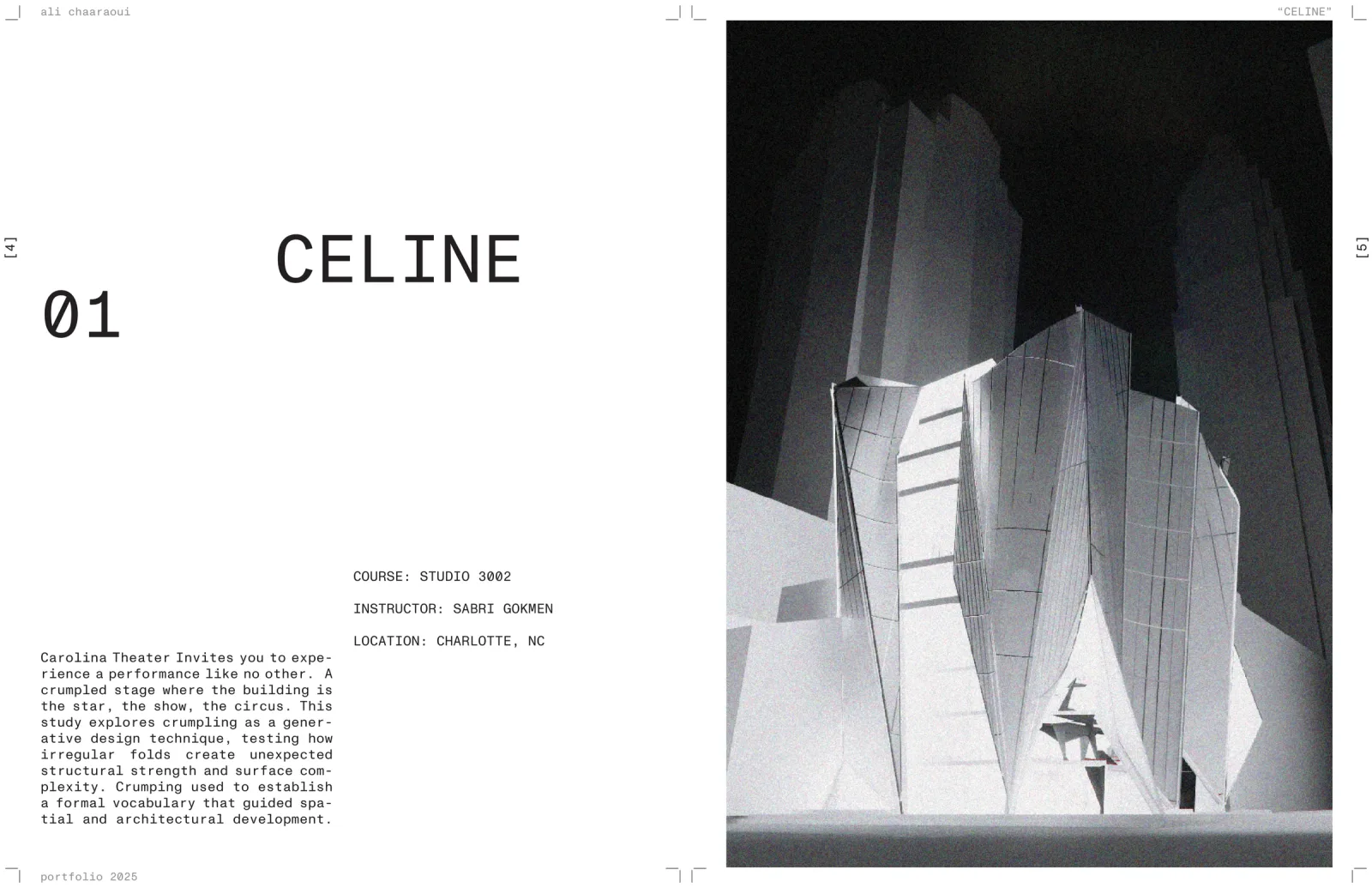
The study takes crumpling as a generative method and asks what irregular folds will do: how they produce unexpected structural strength and surface complexity. Crumpling established a formal vocabulary first, and the spatial and architectural development followed from it rather than the other way round.
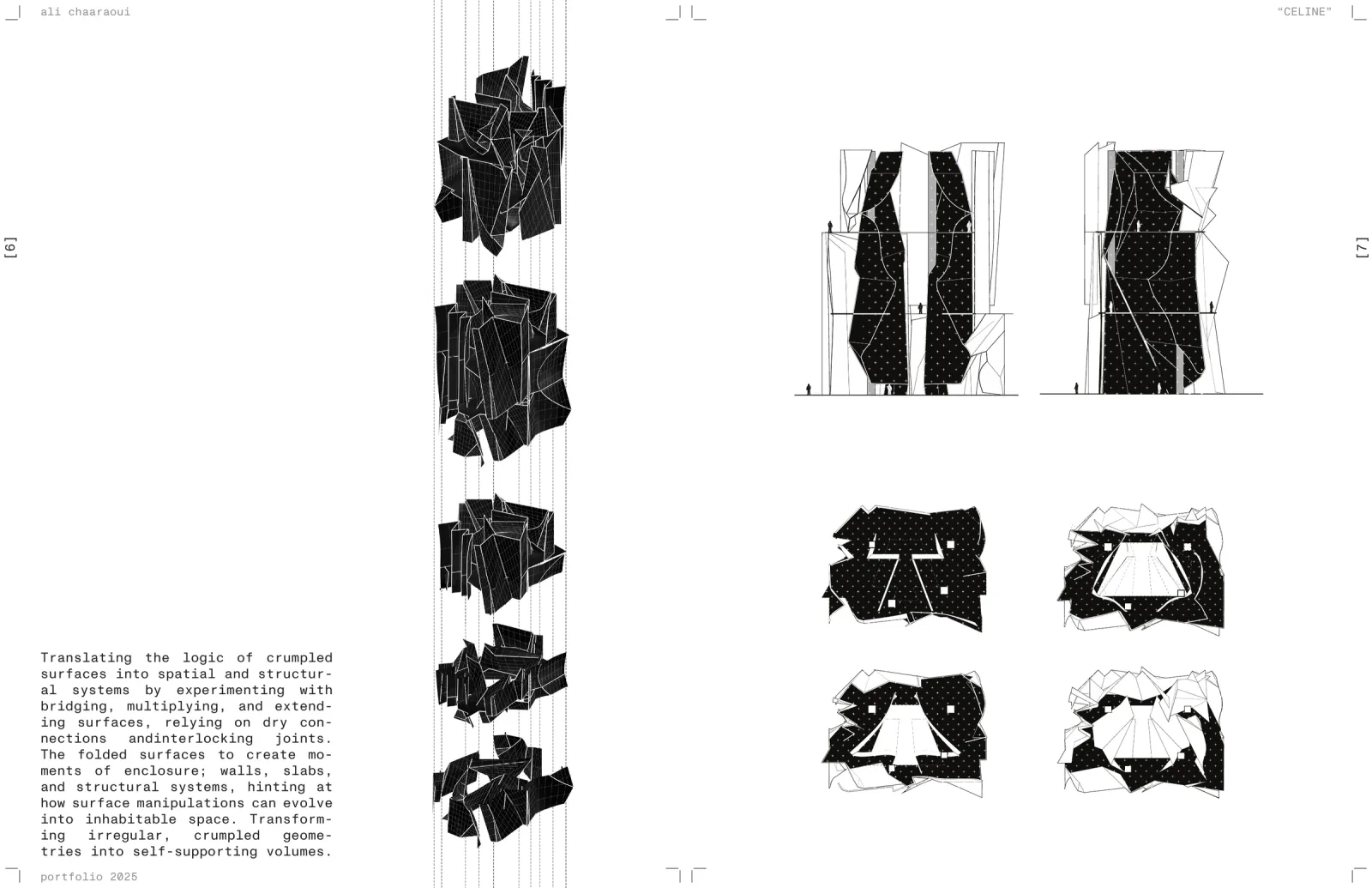
Translating that logic into spatial and structural systems meant bridging, multiplying and extending surfaces, relying on dry connections and interlocking joints. The folds make moments of enclosure — walls, slabs and structure at once — and the irregular geometry resolves into volumes that hold themselves up.
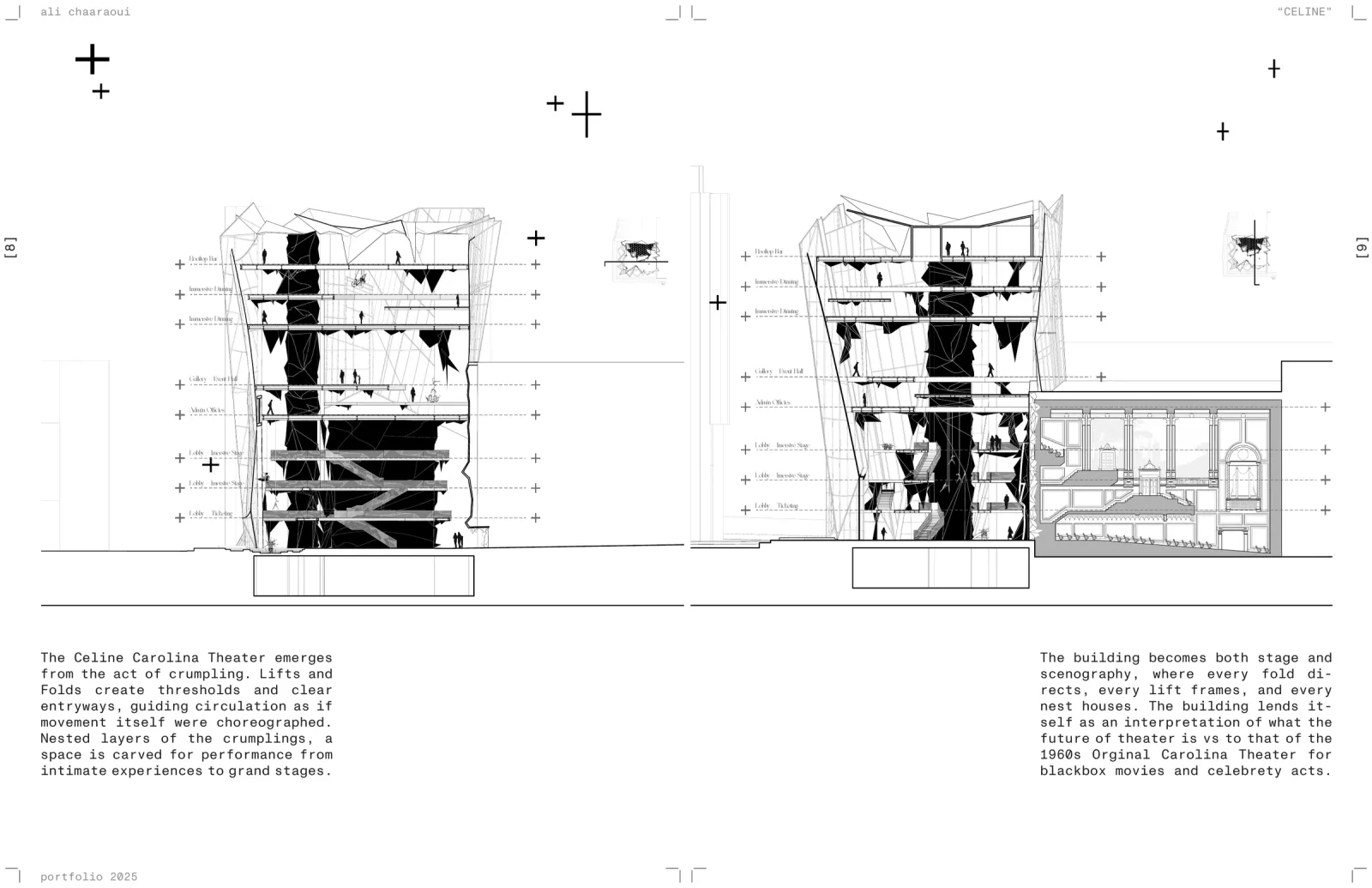
Lifts and folds create thresholds and clear entryways, so circulation reads as choreographed. Nested inside the crumplings, space is carved for performance at every scale, from intimate rooms to the grand stage. The building becomes both stage and scenography: every fold directs, every lift frames, every nest houses.
Set against the 1960s original — a house for black-box movies and celebrity acts — this is an argument about what a theater might be next.